
Have you visited a medieval cathedral such as Notre Dame, Westminster Abbey, or the incredibly tall cathedral in Cologne, Germany? I love the soaring arches, ornate architecture, stained glass windows, and the quiet, contemplative spirit inside. In fact, I think they’re altogether lovely, except for one thing: the gargoyles. It just makes no sense. Why in the world would the Christians of the Middle Ages put such evil-looking monstrosities on the very buildings they were dedicating to the worship of God?
Month: October 2015
Helping the Poor, Part 2
Last week we learned that, while a lot of people fall below the poverty line, that situation is often temporary. Also, while the poor don’t earn much by US standards, it’s still over $10,000 a year—plus government and other benefits. What does that buy you? Today I want to address what life under the poverty line is like.
Granted, it’s not fun being poor. Having fewer resources means you have fewer options—and the answer too often is “no.” Opportunities may be limited. Sometimes, things cost more for those who can least afford it—prices at stores in poor neighborhoods tend to be higher than in middle class areas, and you can’t afford to take advantage of items on sale or discounted in bulk. Add to that frustration—being poor typically correlates with reduced influence, both socially and politically. I’ve always imagined desperate families in cars, skinny, hungry children in ragged clothing, and crime-ridden neighborhoods.
Helping the Poor, Part 1
“Sure, there are poor people overseas, but we have poor people right here in America. It’s more important that we help them first.”
“I want to live in the United States, where even the poor people are fat!” –Indian laborer
“The poor you will always have with you.” –Jesus
It’s common knowledge that we have poor people here in America. There are families without homes, elderly retirees having to choose between buy food or filling a prescription, and children going to bed hungry.
But just how many families are homeless? How common is it for senior citizens to be unable to afford their medications? What percentage of children lack enough food to eat? How big a problem do we have, and how does it compare with the rest of the world?
Ahem?
I hate interruptions. I find them particularly annoying. Put me in front of a computer and give me an article to write or a pile of photos to edit, and I have no problem staying focused. When the house needs cleaning, I set aside a day and get the entire place sparkling. When digging in the garden, I might forget to come in for lunch. And when I read a book, I often read all 400 or so pages in one sitting, even to the point of staying up half the night.
While this predilection to concentrate can be an asset when it comes to getting tasks done, it isn’t so helpful when it comes to relationships. Almost by definition, doing anything with another person tends to involve interruptions. That’s the reason we do things together in the first place. Parenting takes this to an extreme. As anyone who’s ever raised a two-year-old knows, kids are nothing but interruptions!
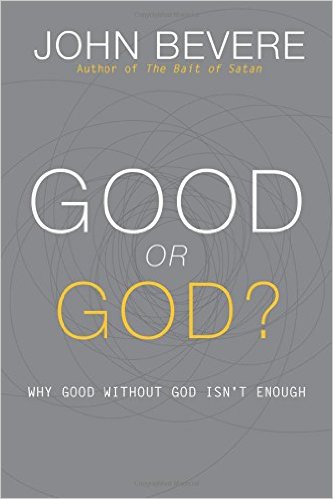
Book Review: Good or God
This is the most significant book I’ve read all year.
Pete and I just spent a fabulous week in a lovely cabin in the Black Hills of South Dakota. Our aim was to stop, reflect, relax, and refresh. Some days we played tourist, enjoying the scenic drives, wildlife, and golden aspen and cottonwoods. Other days we hung around the cabin, reading, talking, and praying. After a crazy year that included moving both our home and Pete’s ministry office, it was just what we needed.
I had a stack of books to read, and managed to make it through several of them. They were all excellent, but if I could pick one to recommend most highly, it would have to be Good or God: Why Good without God Isn’t Enough, by John Bevere.
