
One of my good friends read my “Bait and Switch” article and wrote me a thoughtful email about another kind of bait and switch that has become a significant issue in the church. She gave me permission to fill out her thoughts; the resulting collaboration is today’s post.
___
There is another bait and switch—not pulled off by God, but by the church—that is weakening the Body and causing dissatisfied “customers.” We, the evangelical church, are “selling” the gospel as merely therapeutic, rather than as the Good News it truly is.
God
Don’t Be Surprised
A friend emailed me this morning, distraught that he’d been unfriended on Facebook because of some comments he’d made defending Christianity. I didn’t find his remarks all that offensive—unfriending seems a rather extreme reaction!
Then there was this week’s news that North Korea has banned the import of any products with shapes or logos resembling a cross. It’s not just religious articles or symbols—the ban includes men’s neckties and women’s hair pins!
At first glance, these two events seem to have little in common. A closer look suggests that the same emotion underlies both—fear. Let me explain.
Our Father…
You’re a good, good Father…
It’s a song we sing often at our church. I love the simplicity behind the lyrics—God is a good Father who loves us, His children. With Father’s Day this weekend, I’ve had that song running through my head, and I started wondering—what makes a good Father? When the Bible says that God is our Father, what does that entail?
Sowing a Seed, Being a Blip
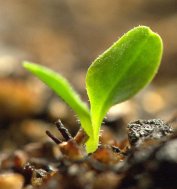 I love to plant seeds. It’s my favorite part of gardening, and I love to garden. I’m constantly amazed that such a small, seemingly lifeless bit of matter can grow into broccoli, marigolds, or zinnias. A quick trip to the garden center would give me instant gratification. I can buy seedlings already well on their way to maturity. I prefer to exercise faith that the seeds will germinate and grow, and eventually produce a crop. And it takes a lot of faith to garden in Colorado.
I’m also a seed planter when it comes to sharing my faith. It’s not as glamorous as harvesting—I can’t name a single person I’ve actually prayed with to receive Jesus. But I can name a number of those who eventually believed, after I was privileged to plant some seeds of faith in the soil of their lives.
Do You Want a Miracle?
“I want to see more miracles!” Our friend pounded his fist into the table to emphasize how emphatic he was. “My biggest desire is to see God at work. I earnestly desire miracles!”
I understand our friend’s passion. Watching God do something incredible, something unexpected, something impossible, builds our faith like little else can. We hear of miracles in other places and we want one of our own.
But do we really?
I love how Pete phrased it: “What does the beginning of a miracle look like?”
Revelation
Head knowledge or heart knowledge? Most of us know the difference. Growing up on the west coast, I “knew” that the plains are flat—but until the year I saw them gently rolling uninterrupted to the horizon as we descended the eastern slope of the Rockies, I really had no concept of what “flat” meant. I can intellectually grasp that it hurts to lose a loved one, but until someone close to me died, it was only an academic principle.
Much of what we learn about God and His ways fits into one or the other of these categories. We study the Bible, listen attentively to sermons, discuss truths in our small groups. But until God reveals these things to us, we are merely learning about Him. We don’t really know. Continue reading
Health & Safety?
What do we do when the Bible seemingly contradicts our life experience? How can we reconcile what God says with what we see happen, when the two don’t match?
How do we handle these verses? Does it lead to a crisis of faith? I know a number of former Christians who have lost their faith over these issues. Do we just accept that the Bible is a bunch of nice thoughts, but it doesn’t apply to real life? Do we conclude that God isn’t to be trusted? Or do we skip over the hard parts, ignore the promises, and muddle through until we die? That’s what I’ve always done. In fact, I have a whole list of questions that I plan to ask God “when I get there.”
Stop. Pray. Listen.
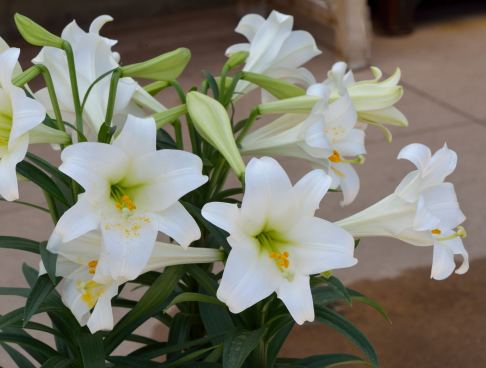
Today is Good Friday. If there was ever a time I want to spend with God, it would be today. This is the day when I want to post something deep and truly significant. Something that brings us into the presence of the Father. Something that points to Jesus, His sacrifice, His love.
Why then is that so hard?
When All Else Fails…
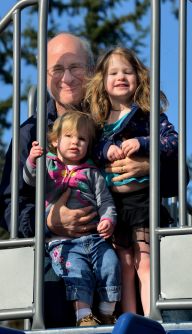 I didn’t run away from God. It was more of a drift, a gradual replacement of time normally dedicated to Him. Three weeks on the road—two weeks with the grandkids—will do that. Getting up early to go birding, eating breakfast on the run instead of at home with my Bible by my plate. Being woken at the first glimmer of dawn by two giggly little girls wanting to snuggle with Grandma and Papa Pete. Days full of familiar friends, new places, flowers, birds, and family. I didn’t run away from God. I got distracted.
We finally arrived home this week after driving 4,000 miles through nine states. After unpacking my suitcase, sorting the mail, and starting the first load of laundry, I sat down to write. Nothing came; my mind was a blank. But what about all those inspiring ideas I’d had while praying as I drove across Wyoming, Utah, Nevada? I’d never had a chance to write them down. They were forgotten. Worse, God wasn’t giving me any new insights. I felt disconnected. Distant. Chagrined that I’d let my most important relationship languish.
Waiting on God
We are a culture of action. We’re eager to get started, to accomplish something. And to a great extent, we are valued according to what we achieve. How much money do we make? What awards have we won? What discoveries have we made?
When we meet someone new, we ask “What do you do?” If we have a need, the standard advice is to “don’t just sit there—do something!” We applaud a man of action and disparage a couch potato. We tell ourselves that life is too short to wait. Continue reading
 Compost