
I’m looking at a copy of Healthy Living Made Simple, a little magazine we received from Sam’s Club. As I flip through the pages, I wonder why Sam’s Club (of all businesses) would be sending out a health magazine. Of course they’re selling an assortment of products—it’s really advertising—but is Sam’s Club my trusted source for important health information?
Household
Does Organic Food Taste Better?
While flavor isn’t directly related to nutrition or environmentally friendly methods of growing, it is important. After all, no matter how healthy the food is, if it tastes bad no one will eat it! So, how does organic food taste? How does it compare to conventionally grown food? Does organic taste better?
 First, we should remember that not everyone likes the same thing. McDonald’s manages to sell an incredible number of burgers, and I think they’re awful. I happen to enjoy Brussels sprouts and lima beans, which probably puts me in the minority. Still, most people like chocolate, strawberries, and fried chicken, so there are some flavors we can agree on. The question is, do most people prefer organic food?
Is Organic Food Healthier?

What makes food healthy? I’d venture to guess that there are two considerations: what it has in it (proteins, carbohydrates, fats, vitamins, antioxidants, and other nutrients) and what it doesn’t have in it (harmful bacteria, plus pesticides and other natural and synthetic chemicals that might harm us).
Organic Pesticides
(This is the next post in my “Organic” series. If you missed the first one, you can find it here.)
It may surprise you to learn that organic farmers use pesticides. The only difference is that, for the most part, their pesticides must derive from natural sources rather than a laboratory. Does this make them safer than synthetic ones?
Consider—copper sulfate, an organic pesticide allowed by the USDA, is more toxic than some synthetic pesticides; an overdose can cause anemia, liver disease, mutations and cancer. Arsenic is a natural substance, but is so toxic that it is banned by the USDA for use on organic crops. Nicotine-derived pesticides, another group of natural chemicals, are also considered too dangerous for use by organic farmers.
Organic
Organic is popular. We eat organic food. We wear organic cotton. Even our household cleaners are organic. Organic is supposed to be good for us and good for the environment. But what does organic mean? Is it really always better?
To the dictionary, organic means “of, relating to, or derived from living matter.” So you and I are organic. The cement sidewalk is not. All the food in my fridge is organic. The refrigerator itself is not.
To a chemist, an organic molecule is “the kind normally found in living systems.” Organic molecules usually include hydrogen, oxygen, nitrogen, and carbon. These atoms can be strung together into long chains or arranged into rings. Starches and proteins are organic molecules. Salt is not.
Housekeeping 101
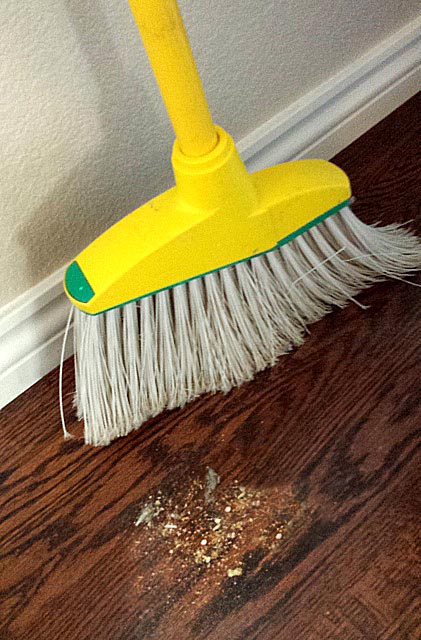 I admit, I’m not the best of housekeepers. Removing every speck of dust just doesn’t seem that important, especially when considered in relation to the current global crisis—or most anything else on my agenda. Our house isn’t dirty, by any means, but I don’t hold myself to the same standard that my grandmothers set, or even my parents. (My dad actually polished the plumbing inside the bathroom vanity!)
Moving into a brand new home has been a revelation. To start with, the place was spotless when we were handed the keys. It had been cleaned for our walk-through the previous week, and cleaned again the day before we closed escrow. I realize that it will never again be so immaculate, but there is a certain pressure to maintain this level of cleanliness for as long as possible.
An Abundance of Possessions
We sold our house. After months of working hard to get it ready, we finally listed it on a Saturday morning in late March—far, far later than the planned February date. I didn’t know what to expect. Would there be hordes of people coming to view it? Would anyone come at all? Given the timing, we needed a quick sale. What would God do?
A lot, it turns out. We received a serious offer a mere seven days after the listing went live. What’s more, the buyers love plants. They’re thrilled about filling the windows with indoor greenery and filling the outside beds with veggies. They’re interested in getting chickens. In fact, they love everything about the house that we do. It’s so much easier to let go when you know you’re blessing someone else as a result!
My Life is in Shambles
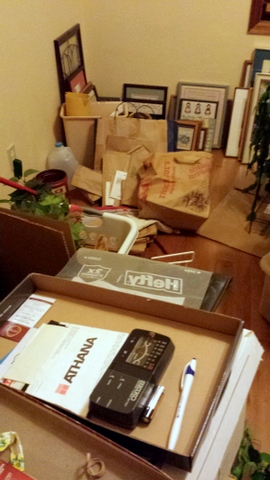 Tuesday night my life came apart.
No, we haven’t suffered any personal disasters. Rather, the painters called around 4:30 pm and said they were coming early the next morning. I had thought they were coming next week.
So I spent from 4:30 until about 9 running around like a maniac, un-hanging curtains, removing artwork from the walls, shoving dressers and sofas into the middle of their respective rooms. The worst part was emptying the pantry.
The Dangers of DHMO
Thanks to the internet, I’m now aware of the dangers of all sorts of things I thought were safe. By taking careful note of the many warnings that eternally circulate on Facebook, I’ve learned that I can live a much longer and healthier life by avoiding items such as frozen water bottles, pineapples (from street vendors), and chicken wings. In that vein, here’s a link to a website that warns about a chemical we all use, that until now I had thought was usually quite safe: DHMO.
www.dhmo.org
Read it over carefully, then share it with everyone you care about.
If you have any questions, please feel free to contact me.
App Happy
With the thousands of apps available it’s easy to feel overwhelmed. Which ones are helpful? Which ones are a waste of money? You can look at the ratings and read the comments, but that doesn’t help you if you’re not sure which apps to search for in the first place. With that thought in mind, here are three random but wonderful apps I’d hate to be without.
Our Groceries
For years, Pete and I had a system for grocery shopping. I’d keep a running list of what we needed at the market, stuck onto the fridge with a magnet. Then whoever was going shopping would simply grab the list and take it with them. Low tech, simple, no problem, right? It all worked perfectly until we began losing the lists. Maybe it’s impending senility, or maybe we just have a lot on our minds, but we’d go off without the list, or we’d leave it somewhere en route. Then we’d buy the wrong things, of forget essentials. Since Pete does most of our shopping (he works in town, while I’d have to make a special trip), I was getting aggravated and he was feeling frustrated.
 Compost