Organic: Some Conclusions

Should we spend more to buy organic? It’s a tough decision. We want to be good stewards of our the environment, our bodies, and our finances. For some of us, the added cost is prohibitive. We simply can’t afford it. But others have some discretionary income. Is this a good place to spend it?

Back in January, I pointed out that we tend to consider buying organic for a number of reasons:

  • We expect these products to have been grown in an earth-friendly manner.
  • We assume they are free of dangerous chemicals.
  • We expect the food to be healthier and more nutritious.
  • We might assume it tastes better.
  • We hope that meat and dairy animals were treated humanely.

Continue reading

Healthy

I’m looking at a copy of Healthy Living Made Simple, a little magazine we received from Sam’s Club. As I flip through the pages, I wonder why Sam’s Club (of all businesses) would be sending out a health magazine. Of course they’re selling an assortment of products—it’s really advertising—but is Sam’s Club my trusted source for important health information?

Continue reading

Does Organic Food Taste Better?

While flavor isn’t directly related to nutrition or environmentally friendly methods of growing, it is important. After all, no matter how healthy the food is, if it tastes bad no one will eat it! So, how does organic food taste? How does it compare to conventionally grown food? Does organic taste better?

big mac.jpgFirst, we should remember that not everyone likes the same thing. McDonald’s manages to sell an incredible number of burgers, and I think they’re awful. I happen to enjoy Brussels sprouts and lima beans, which probably puts me in the minority. Still, most people like chocolate, strawberries, and fried chicken, so there are some flavors we can agree on. The question is, do most people prefer organic food?
Continue reading

Sowing a Seed, Being a Blip

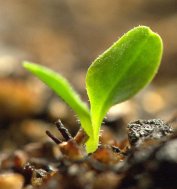
Lettuce seedling_LAH_9671I love to plant seeds. It’s my favorite part of gardening, and I love to garden. I’m constantly amazed that such a small, seemingly lifeless bit of matter can grow into broccoli, marigolds, or zinnias. A quick trip to the garden center would give me instant gratification. I can buy seedlings already well on their way to maturity. I prefer to exercise faith that the seeds will germinate and grow, and eventually produce a crop. And it takes a lot of faith to garden in Colorado.

I’m also a seed planter when it comes to sharing my faith. It’s not as glamorous as harvesting—I can’t name a single person I’ve actually prayed with to receive Jesus. But I can name a number of those who eventually believed, after I was privileged to plant some seeds of faith in the soil of their lives.

Continue reading

Is Organic Food Healthier?

D0018661

What makes food healthy? I’d venture to guess that there are two considerations: what it has in it (proteins, carbohydrates, fats, vitamins, antioxidants, and other nutrients) and what it doesn’t have in it (harmful bacteria, plus pesticides and other natural and synthetic chemicals that might harm us).

Continue reading

Surviving an Election

I normally cringe when an election year approaches. I don’t enjoy politics. Self-promotion annoys me. I’m a “don’t rock the boat” kind of person, and elections are all about boat rocking. But of all the elections I’ve endured since I was old enough to vote (back when the redwoods were young), none have descended to the level of this one. What ever happened to thoughtful, respectful discourse?

It’s not the candidates—it’s their supporters.

Continue reading

Organic Pesticides

(This is the next post in my “Organic” series. If you missed the first one, you can find it here.)

It may surprise you to learn that organic farmers use pesticides. The only difference is that, for the most part, their pesticides must derive from natural sources rather than a laboratory. Does this make them safer than synthetic ones?

Consider—copper sulfate, an organic pesticide allowed by the USDA, is more toxic than some synthetic pesticides; an overdose can cause anemia, liver disease, mutations and cancer. Arsenic is a natural substance, but is so toxic that it is banned by the USDA for use on organic crops. Nicotine-derived pesticides, another group of natural chemicals, are also considered too dangerous for use by organic farmers.

Continue reading

Organic

Organic is popular. We eat organic food. We wear organic cotton. Even our household cleaners are organic. Organic is supposed to be good for us and good for the environment. But what does organic mean? Is it really always better?

To the dictionary, organic means “of, relating to, or derived from living matter.” So you and I are organic. The cement sidewalk is not. All the food in my fridge is organic. The refrigerator itself is not.

To a chemist, an organic molecule is “the kind normally found in living systems.” Organic molecules usually include hydrogen, oxygen, nitrogen, and carbon. These atoms can be strung together into long chains or arranged into rings. Starches and proteins are organic molecules. Salt is not.

Continue reading

One Way to Alleviate Poverty

It’s that time of year again. The Salvation Army bell ringers are stationed in front of stores, markets, and malls, soliciting donations. My email inbox is full of requests for funds from organizations as diverse as World Vision and National Audubon. Our small group has “adopted” a single mom and her three kids—we’re helping with decorations, gifts, and special meals. We’re all familiar with the idea of donating food and clothing, or perhaps simply cash, especially during the holiday season.

But do these donations really help?

Continue reading

Helping the Poor, Part 3

(This is the third article in a series on poverty. If you missed the previous two, please back up a few weeks and read those posts.)

What does poverty look like around the world?

Before we get any further, let me clarify some terminology. It turns out that sociologists use the terms absolute poverty and relative poverty, and it’s important to know the difference. According to the UNESCO website,

Absolute poverty measures poverty in relation to the amount of money necessary to meet basic needs such as food, clothing, and shelter. The concept of absolute poverty is not concerned with broader quality of life issues or with the overall level of inequality in society. The concept therefore fails to recognise that individuals have important social and cultural needs. This, and similar criticisms, led to the development of the concept of relative poverty. Relative poverty defines poverty in relation to the economic status of other members of the society: people are poor if they fall below prevailing standards of living in a given societal context.

Continue reading