Does Organic Food Taste Better?

While flavor isn’t directly related to nutrition or environmentally friendly methods of growing, it is important. After all, no matter how healthy the food is, if it tastes bad no one will eat it! So, how does organic food taste? How does it compare to conventionally grown food? Does organic taste better?
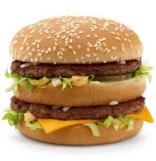
big mac.jpgFirst, we should remember that not everyone likes the same thing. McDonald’s manages to sell an incredible number of burgers, and I think they’re awful. I happen to enjoy Brussels sprouts and lima beans, which probably puts me in the minority. Still, most people like chocolate, strawberries, and fried chicken, so there are some flavors we can agree on. The question is, do most people prefer organic food?

Continue reading

Is Organic Food Healthier?

D0018661

What makes food healthy? I’d venture to guess that there are two considerations: what it has in it (proteins, carbohydrates, fats, vitamins, antioxidants, and other nutrients) and what it doesn’t have in it (harmful bacteria, plus pesticides and other natural and synthetic chemicals that might harm us).

Continue reading

Pesticide-free Food? Forget It!

059 fruit @PikeMarSea LAH

(This first appeared on my other blog, Mountain Plover.)

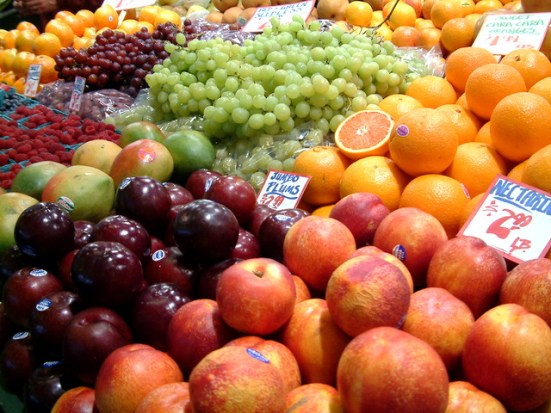
I was at the market picking out some grapes when a large woman ran up to me and grabbed my arm. “Don’t buy those!” She looked alarmed. “They’re not organic!”

Thankfully, I’m rarely accosted in the produce department , but I frequently hear the same lecture from many of my friends. Don’t take man-made drugs. Don’t use artificial sweeteners. Don’t eat food that isn’t organic. You’re poisoning yourself. Natural is safe. Everything else isn’t.

I should point out that I have no desire to poison myself with dangerous chemicals, but our concern about the difference between “natural” and “manmade” chemicals is irrelevant. Both laboratories and nature produce those that are safe and others that are not-so-safe. Arsenic is natural. Vitamin C can be replicated in a laboratory.

Continue reading

Organic Pesticides

(This is the next post in my “Organic” series. If you missed the first one, you can find it here.)

It may surprise you to learn that organic farmers use pesticides. The only difference is that, for the most part, their pesticides must derive from natural sources rather than a laboratory. Does this make them safer than synthetic ones?

Consider—copper sulfate, an organic pesticide allowed by the USDA, is more toxic than some synthetic pesticides; an overdose can cause anemia, liver disease, mutations and cancer. Arsenic is a natural substance, but is so toxic that it is banned by the USDA for use on organic crops. Nicotine-derived pesticides, another group of natural chemicals, are also considered too dangerous for use by organic farmers.

Continue reading

Organic

Organic is popular. We eat organic food. We wear organic cotton. Even our household cleaners are organic. Organic is supposed to be good for us and good for the environment. But what does organic mean? Is it really always better?

To the dictionary, organic means “of, relating to, or derived from living matter.” So you and I are organic. The cement sidewalk is not. All the food in my fridge is organic. The refrigerator itself is not.

To a chemist, an organic molecule is “the kind normally found in living systems.” Organic molecules usually include hydrogen, oxygen, nitrogen, and carbon. These atoms can be strung together into long chains or arranged into rings. Starches and proteins are organic molecules. Salt is not.

Continue reading

The Very Best Christmas Cookie

“Here, you will need to learn these recipes!” My future mother-in-law pressed the cookbook into my hands. She was smiling, but I knew that she was serious. Pete’s mom was 100% Finnish, and now she expected me to help carry on her family traditions.

Finnish cookbookThe Finnish Cookbook, by Beatrice A Ojakangas, was published in 1964, and to a great extent, the contents reflected that era. There were numerous casseroles and few vegetable dishes. Almost half the book was devoted to the “coffee table”—a spread of cookies, cakes, breads, tarts, and tortes all containing huge quantities of butter, cream, and sugar. It all looked delicious—and really, really bad for you. I quickly realized that while I might learn to make these things, I was going to have to ration them carefully!
Continue reading

Healthy Alternatives?

I was shopping at my local supermarket when I came across this display of gluten-free baked goods. In case you can’t read the pink lettering, it reads “Healthy Alternatives.” Really?

gluten free healthy hahaHere’s a better view of what they’re selling:

gluten free healthy haha 1The thing is, there’s nothing healthy about this stuff. These pies, cakes, and cookies might not contain gluten, but you can be sure they’re full of sugar and butter (or shortening).

Moreover, many gluten-free flour replacements are worse for you than flour*. Sure, they’re a God-send if you truly can’t handle gluten and still want an occasional treat. But if your goal is merely to eat healthier, look elsewhere (such as in the produce section). Corn starch, white rice flour, potato starch, etc. all cause a precipitous rise in your blood sugar. Can you say “diabetes”?
___

* According to a glycemic index chart, white flour has a glycemic index of 85, the same as cornstarch. Potato starch is 90 while rice flour is 95. (Pure glucose is 100.) They’re all bad for you!

Whole Egg Masala (Ande ki Kari)

Looking for something to do with all those hard cooked eggs? Tired of deviled eggs and egg salad sandwiches. Here’s a way to use them for dinner, and no one will complain.

I often make chicken masala, one of my favorite Indian dishes, but you can use other protein sources instead. This recipe uses eggs, but you could substitute tofu for a vegan dish. The recipe was adapted from Classic Indian Cooking, by Julie Sahni. Don’t be put off by the long list of ingredients. Most of them are spices, and combine quickly. The tedious part is browning the onions. It’s vital to arrive at the point where they’re very soft but not burned.

I like to serve it with a vegetable dish such as muttar paneer (peas and fresh cheese), veggie korma, or cauliflower and green onions with turmeric and black mustard seeds. Add a raita (cucumbers in yogurt) and brown basmati rice or chapatis for a complete meal. Then invite me over, please!

Continue reading

Fear of Food

What I learned from the internet in the last week:

  • Beans are good for you. (source)
  • Beans are bad for you. (source)
  • Whole grains are healthy and we should eat more of them. (source)
  • Grains are bad for you. Whole grains are worst. (source)
  • Saturated fats (lard, etc.) are good for you. (source)
  • Saturated fats (lard, etc.) are bad for you. (source)
  • A daily handful of nuts will reduce your risk of heart disease. (source)
  • Nuts are toxic and eating them causes heart disease. (source)
  • Continue reading